
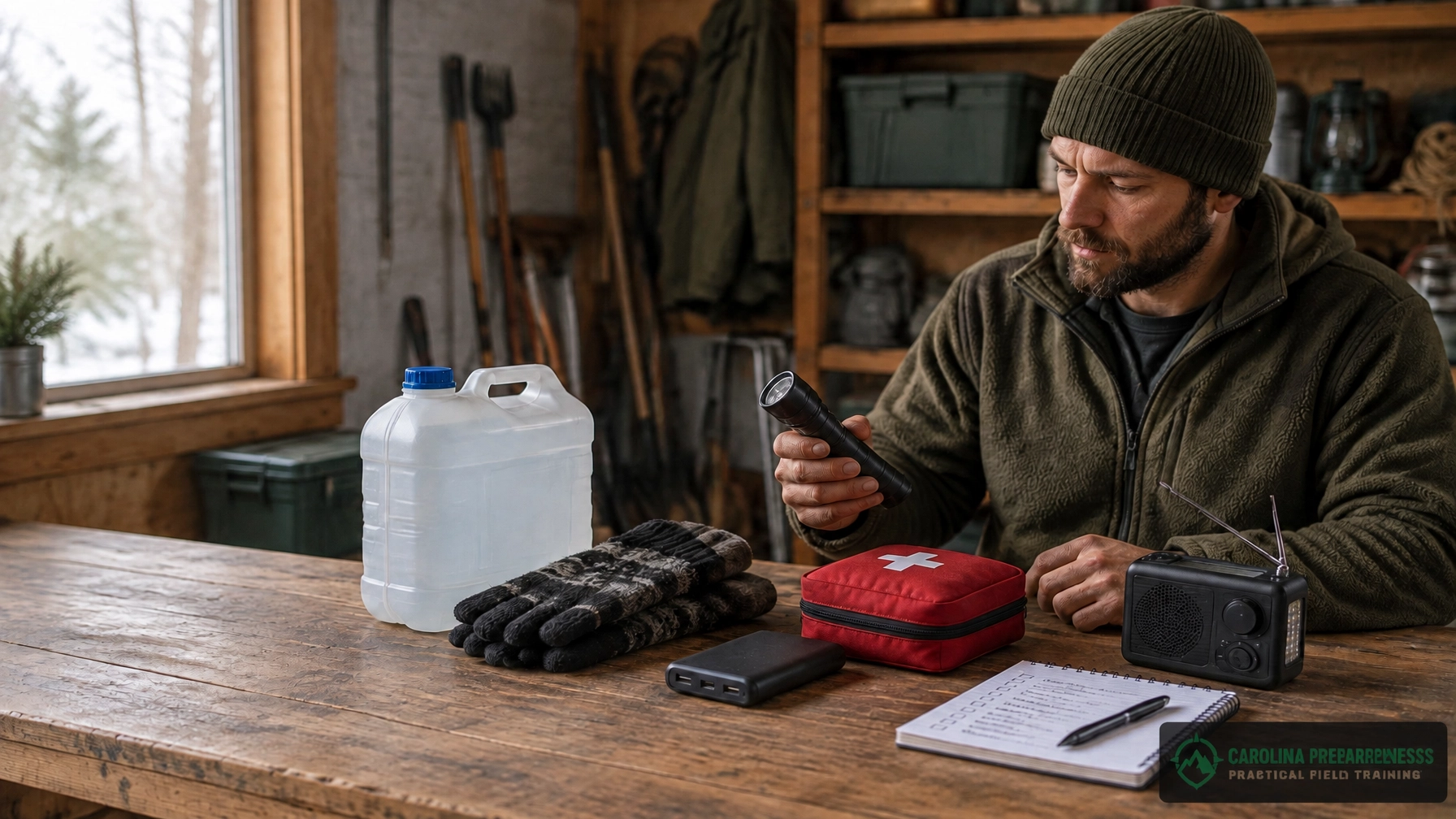
Black Friday is November 27, 2026, and Cyber Monday is November 30. They can be useful times to fill gaps in a household emergency kit, but a discount is only worthwhile if the item works, fits your needs, and is something you know how to use.
Start with the basics, compare the exact products, and avoid buying gear just because a countdown clock says the offer will disappear. Here’s a practical way to shop for Black Friday preparedness deals without getting distracted by hype.
1. Water storage and filtration
Stored water is a better first purchase than an expensive filter you may not need yet. Ready.gov recommends storing at least one gallon per person per day for several days, with more for heat, medical needs, pets, or sanitation.
Look for food-grade containers with secure caps, a size you can lift when full, and clear instructions for cleaning and storage. If you buy a filter, check what it removes, its rated capacity, and the cost of replacement parts. For example, Sawyer explains that its filters target bacteria and protozoa but do not remove dissolved chemicals or salts. A filter is not a fix for every kind of contaminated water.

Compare the complete setup: filter, clean storage, replacement elements, and any backup treatment you plan to use. Read the manufacturer’s directions before relying on it. For basic emergency-kit guidance, see Ready.gov’s supply list.
2. Flashlights, batteries, and power banks
A reliable light is more useful than a flashlight with a huge lumen claim and no clear runtime. Consider one light per person, plus a lantern or other area light. Check the low-mode runtime, battery type, charging method, water resistance, and whether the charger or battery is included.
For power banks, compare watt-hours or capacity, USB-C output, charging speed, and the devices you expect to charge. For a larger power station, compare usable capacity, continuous output, recharge time, weight, and whether the sale includes a solar panel or extra battery. Those bundles are not directly comparable to a basic unit.
Make sure you can recharge and operate the equipment you buy. Store the right cables and spare batteries with it, and test the setup before an outage.
3. First-aid supplies
A first-aid kit should match your household and your level of training, not simply have the biggest item count. Check for useful basics such as sterile gauze and dressings, medical tape, gloves, bandages, scissors, and clear instructions. Add personal prescriptions, allergy supplies, children’s needs, and any items your family uses regularly.
Inspect expiration dates and replace supplies as needed. For products intended to control severe bleeding, buy from a reliable, authorized seller and learn how to use them through proper training. A low price is not a good trade for questionable sourcing or unfamiliar equipment.
4. Radios and communications
A battery-powered or hand-crank radio that receives NOAA Weather Radio can help when phone service or power is unavailable. Check how it is powered, whether it takes common batteries, and whether it has a weather alert feature.
Two-way radios require more comparison. Check the radio service and licensing rules, battery options, charging method, and realistic range for your terrain. A bold range claim on the box does not guarantee the same result in a neighborhood, building, or wooded area.
If you want to build a family communication plan alongside your equipment, Carolina Preparedness offers communications training.
5. Food storage and cooking basics
A useful food reserve starts with food your household already eats. Consider canned goods, grains, pasta, shelf-stable snacks, and foods that fit dietary needs. Add a manual can opener and plan for how you will prepare food if the power is out.
For packaged emergency meals, compare calories and servings, not just the number of packets or the advertised discount. Check preparation instructions, water needs, storage conditions, allergens, and package dates. A meal that needs a lot of water may not be the best choice if your water supply is limited. Store food properly and rotate it so it remains familiar and usable.
6. Warm layers and vehicle supplies
Cold-weather clothing is practical preparedness gear. Look for layers you can combine: a base layer, an insulating layer, and an outer layer that blocks wind and sheds water. Include warm socks, gloves, a hat, and footwear suited to local conditions. Ready.gov’s winter storm guidance recommends having supplies and warm clothing available in more than one place.
A vehicle kit may also need a blanket, flashlight, water, first-aid supplies, jumper pack, and a shovel, depending on your climate and travel. Check the vehicle’s storage space and the temperature limits for any batteries or electronics you plan to keep there.

7. Tools and everyday essentials
Before buying a novelty survival gadget, check whether you have a manual can opener, work gloves, duct tape, a basic tool set, a whistle, spare batteries, and a paper map of your area. Pick items with clear instructions and common replacement parts. A useful tool is one you can find, operate, and maintain.
How to spot a real deal, and skip the junk
Before you buy, write down the specific gap you are trying to fill. Then check:
- Exact model and contents: Compare the same model, battery, accessories, and bundle, not just a similar product photo.
- Key specifications: Look for capacity, runtime, output, materials, water resistance, shelf life, and replacement-part availability.
- Seller and warranty: Use a reputable seller, especially for filters, batteries, and medical or safety equipment. Read the return policy.
- Price comparison: Compare the current price with prices for the same item elsewhere. A percentage off a suggested retail price does not prove it is a bargain.
- Your experience: Ask whether you know how to use the item and whether you can test it before storing it.
Avoid no-name products with unclear specifications, exaggerated claims, or no accessible support information. If you cannot verify what the item does or how to maintain it, skip the deal.
A simple preparedness shopping budget
Set a limit before browsing. If you have $100, for example, you might put it toward a water-storage gap, dependable lights and batteries, or first-aid supplies your household needs. With a larger budget, work through the essentials before moving to specialized gear.
Use this order as a starting point:
- Water storage and safe handling
- Food your household will eat
- Lighting and batteries
- First-aid supplies and prescriptions
- Radio and phone charging
- Warm layers and vehicle supplies
- Specialized equipment
Your needs may change the order. A family that already has stored water may reasonably focus on winter clothing or communications next. The goal is a kit that fits your home and routines, not a cart full of sale items.
Find deals with a plan
Forrest’s PrepperFinds is his site for browsing preparedness-related deals and gear picks. Use it as a research starting point, then confirm the current price, exact product details, seller, and return terms before ordering. Listings can change, and the right purchase depends on your needs.
PrepperFinds also discloses that it may earn from qualifying purchases through affiliate links. That does not replace your own comparison; it is simply useful to know as you browse.
Gear helps. Practice makes it useful.
A filter needs to be used correctly. A radio needs to be set up. A first-aid kit needs to be understood. Before you store new gear, test it and show the household where it is kept. Follow the manufacturer’s directions, then make a short practice part of your routine.
Black Friday and Cyber Monday can help you buy useful items at a lower price, but preparedness does not depend on catching every sale. Start with one real gap, compare carefully, and buy equipment you can maintain and use. If you would like hands-on practice with practical skills, explore Carolina Preparedness courses.
Excerpt: A calm, practical guide to Black Friday preparedness deals, including what to buy, how to compare gear, and how to avoid sale-driven purchases that do not fit your needs.
SEO title: Black Friday Preparedness Deals: Gear Worth Buying
Meta description: Shop Black Friday preparedness deals with a plan. Compare water, lighting, first aid, radios, food, winter gear, and tools before buying.
Focus keyword: Black Friday preparedness deals
Featured image alt text: A person checking practical emergency supplies at a workbench, including a flashlight, power bank, first-aid pouch, water container, gloves, and radio.
Tags: Black Friday, Cyber Monday, preparedness gear, emergency supplies, water storage, winter preparedness, PrepperFinds, preparedness shopping