
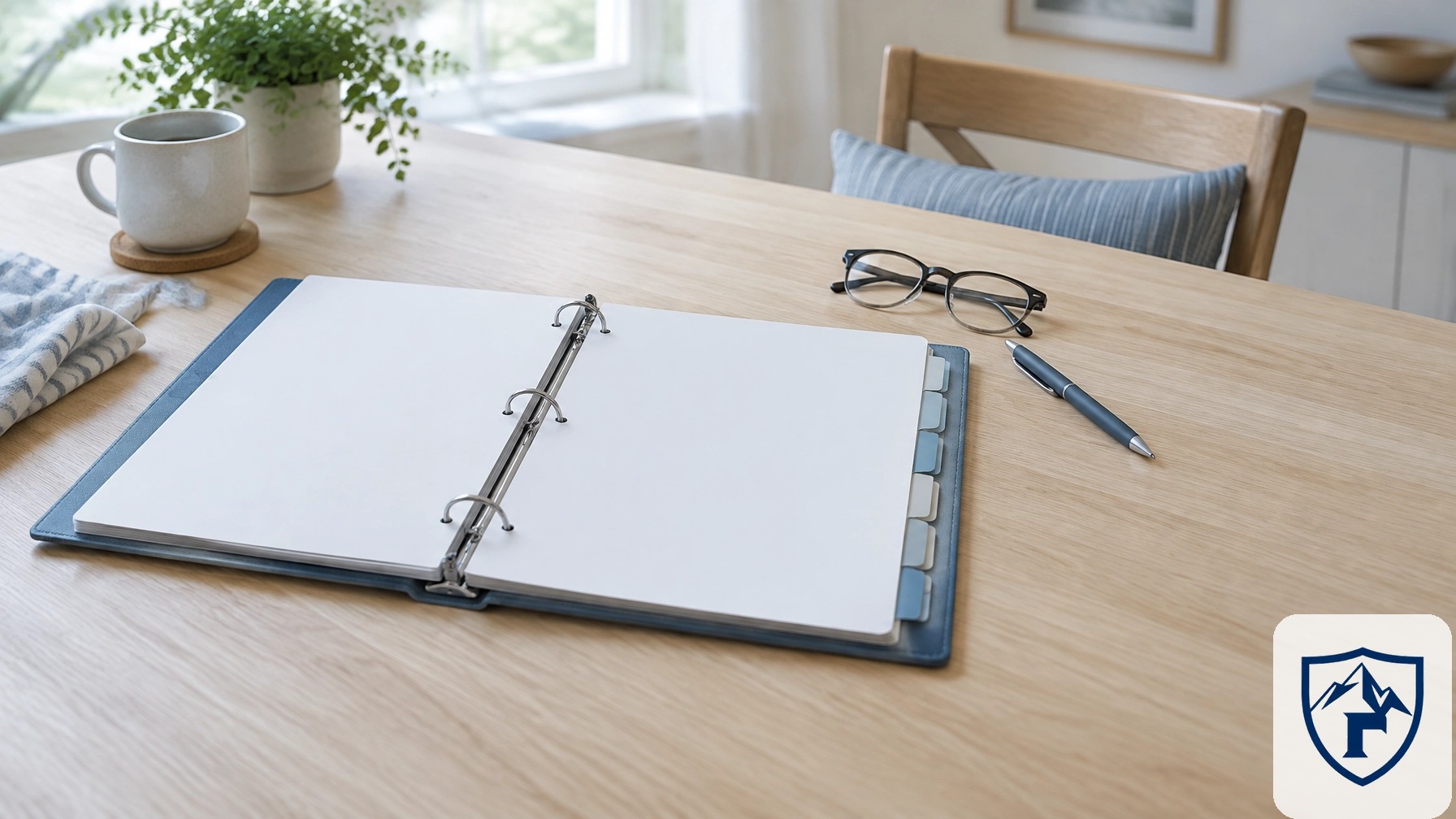
There is a binder on the shelf. Its cover page lists your old address, an old pediatrician, an insurance policy you no longer have, and a meeting place that is now a 40-minute drive in the wrong direction.
An emergency binder is your household’s written record of who, where, what, and who decides. It helps people act when the household is separated or normal routines change.
The plan inside it may still be fine. The facts are what have gone out of date. That happens when life changes. A move, new job, new school, or new household member can make a once-useful record inaccurate without anyone noticing.
An emergency binder is a snapshot, and snapshots go stale
A plan is the logic behind your decisions: how your household communicates, where you meet, and who handles a task. That logic often survives a move.
The facts that make the plan usable are more likely to change: addresses, phone numbers, doctors, schools, routes, contacts, account numbers, and meeting points. If those details are wrong, a sound plan can still leave people guessing.
These changes quietly invalidate an emergency binder:
- A move to a new home, neighborhood, or town
- A new job or shift schedule
- A new school or childcare provider
- A new baby
- An older parent moving in
- A divorce or separation
- A death in the household
- A new vehicle
- A new phone number
- A change in medication
- A change in who has a key to the house
None of these changes means you failed to plan. They mean the household changed and the record needs to catch up. Treat the binder as a snapshot, not a permanent file. After a major change, update it rather than waiting for your regular review.
The five sections of an emergency binder that go stale first
Start with the pages someone would need to make a decision or reach another household member. Update these five sections first.
-
Household roster and medical information. Check everyone’s full name, date of birth, current doctors, prescriptions, allergies, insurance details, and any information a caregiver would need. Remove information that no longer applies.
-
Contacts and who to call. Confirm the out-of-area contact’s number and that they still agree to serve in that role. Update neighbors, school or childcare contacts, work numbers, and relevant utility providers. Make clear who calls whom, and who is authorized to pick up each child.
-
Locations and routes. Replace old meeting points with places that make sense from your current home, school, and work. Write down the walk route, an alternate route, and where spare keys are kept. Check whether the route still works for the people who will use it.
-
Documents. Review what copies are included and where originals are kept. This may include IDs, insurance records, property documents, and powers of attorney. For legal documents, consult a qualified professional. This is not legal advice.
-
Money and access. Record the location of emergency cash and the information needed to find relevant accounts. Handle passwords safely. Do not leave a plainly written password list in a binder that could be accessed by others; use a secure method suited to your household.

How to re-baseline an emergency binder in one sitting
Set aside an hour, gather the household record and current information, then work through it in order. The goal is not to make the binder elaborate. It is to make it accurate and usable.
- Put everything on the table. Gather the binder, current contact details, school information, medication lists, and any other records you need to check.
- Mark every page current, outdated, or missing. Add a date to pages you verify. Flag details you cannot confirm instead of assuming they are still right.
- Rewrite the four contact-critical pages first. Update the household roster, contacts, locations, and medical information. These pages help someone reach people and make immediate decisions.
- Walk the new route to your meeting point once. Check the route on foot if that is how someone may need to travel. Confirm the destination is still accessible and clearly identified.
- Tell every household member where the binder is and what it contains. Each adult should know how to find the information they may need. Children can learn the parts appropriate to their age.
- Set two review dates a year. Choose dates you will remember. Also update the record when a major change happens instead of waiting for the next review.
For backup contacts and routes, the free P.A.C.E. backup-planning ebook offers a framework for thinking through primary, alternate, contingency, and emergency options.
The test that exposes an out-of-date binder
Choose a normal weekday, not an unusual scenario. Read the plan aloud with everyone present and ask:
- Who would pick up each child from the new school?
- Which neighbor has a key to the house?
- What is the out-of-area contact’s current number?
- How would someone get from work to the new meeting point?
If anyone has to guess, that line needs to be rewritten. Do not rely on one person to fill in the missing details from memory. The purpose of the read-through is to find gaps while the household is together, then correct them.
Why one person usually holds the whole binder
Often, one person manages the binder. They know which pages are current, where the backup information is, and how the household expects to use it. The binder may look complete, but the plan only works if that person is available to explain it.
The fix is a one-page summary that another adult in the house can act on. Keep it on the fridge or in a shared folder, with the detailed binder behind it. Include the current meeting point, key contacts, who handles essential responsibilities, and where the full record is stored.
A 30-person group needs the same idea at group scale: clear roles, named backups, and a short reference members can use without depending on one planner’s memory. The details differ, but the principle is the same. A plan needs to be understood by the people expected to use it.
Where an emergency binder quietly fails
- Outdated facts look authoritative because they are printed. Date pages and verify details rather than trusting a polished, old record.
- Copies are kept in one place only. Keep the household copy at home and a secure digital copy accessible to the people who need it.
- Legal documents were never reviewed by a professional. Consult a qualified professional about those documents.
- The binder describes a scenario, not your actual weekday. Check school pickups, work schedules, routes, and household responsibilities as they are now.
- No one else is trained to use it. Make sure another adult can find the information and explain the basic plan.
Emergency binder FAQs
What goes in an emergency binder?
Include current household and medical information, contacts, meeting locations and routes, relevant document details, and a safe way to locate financial and access information. Keep it practical and specific to your household.
Should an emergency binder be paper or digital?
Use the format your household can access and keep current. A paper copy is easy to use without a device; a secure digital copy can provide backup. Protect private information in either format.
How often should I update an emergency binder?
Review it twice a year and update it whenever a major fact changes, such as your address, school, job schedule, household members, or medication. Do not wait for a scheduled review after a move.
Does a binder replace a family communication plan?
No. The binder records information, but household members still need to understand how to communicate, where to meet, and who makes decisions. Review the plan together and practice using it.
Get help rebuilding the plan behind the binder
If your binder is out of date, the task is not just replacing pages. You need to confirm that the plan fits the household you have now and that everyone can use it.
I recommend hiring someone to help you work through the gaps. Preppers Consulting provides one-on-one consulting directly with Forrest Garvin, founder of PrepperNet, with 20+ years working with families and group leaders. You work directly with Forrest, not a team or a template. The plan is built around your situation, whether you are planning for a family of four or a 30-person group.
Schedule a call, or submit the 2–3 minute application. See what consulting includes.
SEO Metadata
SEO Title: Emergency Binder: Update Your Household Plan After a Move
Meta Description: Your emergency binder may still hold a sound plan, but a move makes its facts obsolete. Recheck contacts, routes, and medical details before you need them.
Tags: emergency binder, family emergency preparedness plan, family preparedness, household planning, emergency contacts, family communication plan, preparedness consulting
Featured Image Alt Text: An open emergency binder with blank pages and tabbed dividers, a pen and reading glasses on a kitchen table
Featured Image Caption: A move can leave the plan intact while the facts in your emergency binder go stale.