Buying emergency supplies is a useful first step. It is not the same as being prepared.
A bag of equipment cannot make decisions, read a map, purify water, communicate with your family, or stay calm when a plan changes. Those tasks require knowledge and practice. This is why emergency preparedness training matters.
The goal is not to own the most gear. The goal is to become capable of using the right tools at the right time.
Gear is only part of the plan
Preparedness gear has a clear purpose. A flashlight helps when the power is out. A first aid kit provides useful supplies. A radio may help when cell service is unavailable. A water filter can make an available water source safer to use.
But each item has limits.
A flashlight needs working batteries. A radio needs to be set up and understood. A first aid kit is only useful when someone knows how to assess an injury and use the supplies. A water filter must be used correctly and maintained.
The equipment supports the skill. It does not replace the skill.
Emergency preparedness training helps you understand what your equipment can do, what it cannot do, and how it fits into a larger plan.
Practice changes how you respond
Emergencies can create confusion. People may need to make decisions with incomplete information, limited time, or changing conditions. Familiar actions are easier to perform than actions you have only read about.
Practice helps you:
- Identify the most important task first
- Use equipment without wasting time
- Notice problems with your plan
- Work with family members or a small group
- Adjust when conditions change
- Build confidence without relying on guesswork
This does not require dramatic simulations. Simple practice is enough to find gaps.
Try setting up your emergency communication plan. Walk through a home evacuation route. Pack a small kit and carry it for several hours. Use a map and compass on a familiar piece of land. Review how to collect and treat water.
Each exercise gives you information. You learn what works, what is uncomfortable, and what needs to change.
The most useful preparedness skills are practical
A strong training program should connect skills to ordinary problems. Power outages, severe weather, vehicle trouble, communication failures, and short-term evacuations are common examples.
Useful emergency preparedness training may include the following areas.
Planning and decision-making
A basic plan should answer simple questions:
- How will family members contact each other?
- Where will you meet if you cannot return home?
- Who needs medication, transportation, or other support?
- What information should be written down?
- When should you stay home, and when should you leave?
- What will you do if your first plan does not work?
Planning is not about predicting every event. It is about creating a starting point.
Carolina Preparedness offers Family and Community Emergency Preparedness to help households and neighbors plan together. A group with shared expectations can respond more smoothly than people working from separate assumptions.
Emergency communications
Cell phones are useful, but they are not guaranteed. A local outage, overloaded network, damaged infrastructure, or dead battery can interrupt communication.
Training can help you compare communication options and understand when each one is useful. It can also help you create a simple contact plan that your household can follow.
The Emergency Communications course covers options for situations when cell service and internet access cannot be counted on.
The skill is not simply owning a radio. The skill is knowing how to use it, who to contact, and what information to share.

Water collection and treatment
Water is heavy and difficult to store in large quantities. A household plan should include stored water, but it should also account for how water will be collected and treated if the situation lasts longer than expected.
Hands-on practice can cover:
- Finding possible water sources
- Collecting water without adding more contamination
- Using filters and other treatment methods
- Understanding the limits of each method
- Storing treated water safely
- Planning for hot or cold conditions
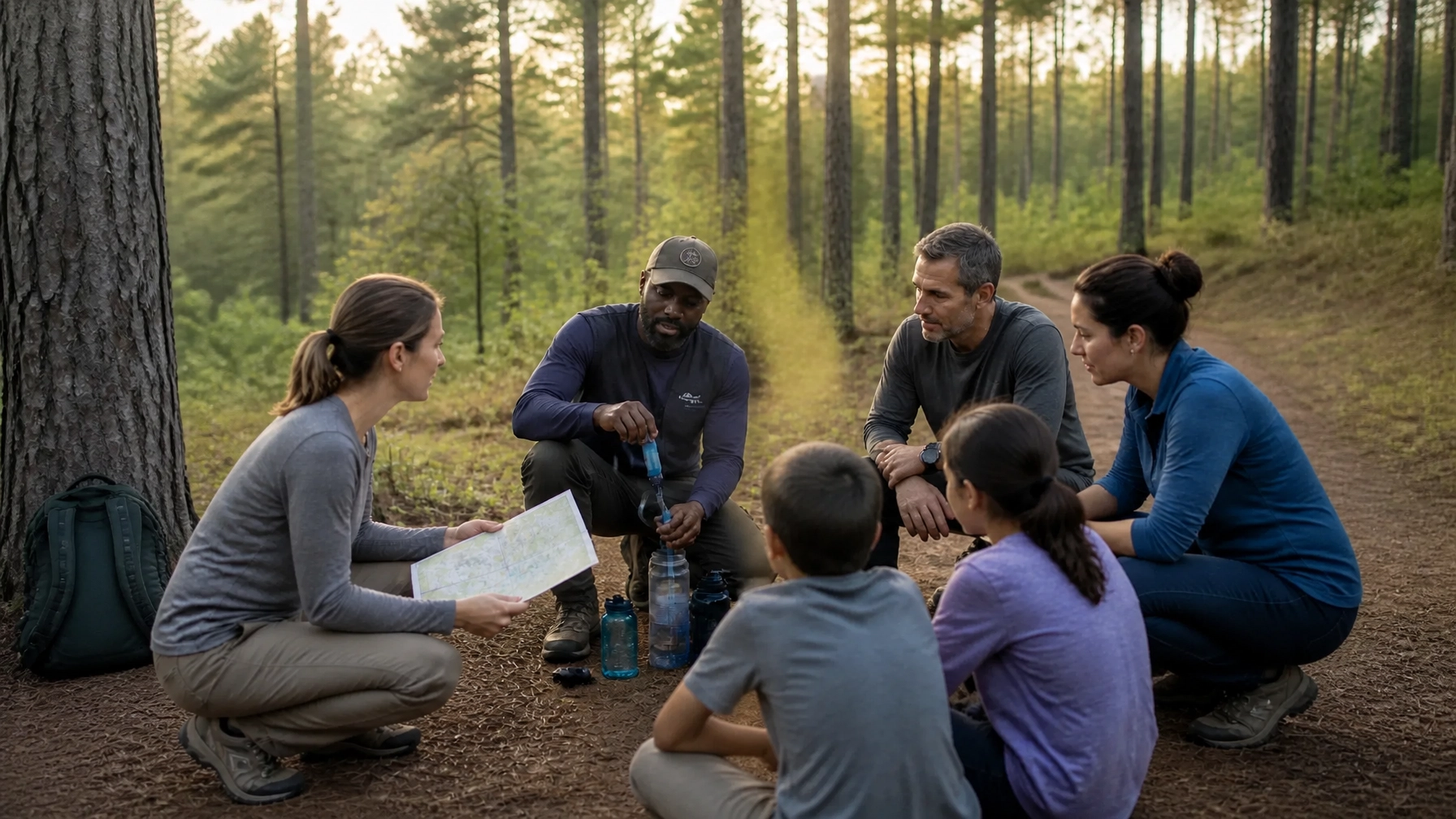
Carolina Preparedness teaches these skills through Water Survival Training and the Wilderness Survival: Core Survival Skills course.
Reading instructions is helpful. Using the equipment in the field gives you a clearer understanding of the process.
Shelter and fire
A shelter protects against weather, wind, heat loss, and exposure. Fire can support warmth, cooking, light, and morale. Both skills require safe methods and careful judgment.
A practical course should give students time to work with the materials they may actually have. That may include tarps, cordage, natural materials, containers, and basic fire-starting tools.
The Emergency Shelter course focuses on building weather-appropriate shelters. The Survival Fire Starting course covers multiple methods for starting, tending, and safely extinguishing a fire.
The point is not to build the largest shelter or the most impressive fire. The point is to complete the task safely and understand what the conditions require.

Navigation
Many people rely on phones for directions. That works until the battery is empty, the signal is weak, or the route is blocked.
Map reading and compass skills provide another option. They also improve your understanding of the area around your home, workplace, or regular travel routes.
In a field-based navigation class, students can practice:
- Reading basic map symbols
- Understanding distance and direction
- Taking a bearing
- Matching map features to the land
- Planning a route
- Staying oriented when visibility is limited
Carolina Preparedness offers Map Reading and Land Navigation and GPS Navigation. These courses help students use modern and traditional tools together.
A 72-hour kit still needs a trained person
A 72-hour emergency kit is a reasonable project for many households. It may include water, food, light, first aid supplies, extra clothing, hygiene items, communication equipment, and important documents.
But a kit should be built around your household: not around a generic checklist.
Consider:
- The number and age of people in your household
- Medical needs
- Dietary needs
- Pets
- Transportation
- Local weather
- Work and school locations
- How far you may need to carry the kit
- Which items you already know how to use
Carolina Preparedness offers Bug Out Bags, a beginner course focused on building a practical 72-hour emergency kit that fits your lifestyle, budget, and plans.
The best kit is one you can carry, check, maintain, and use.

What to look for in emergency preparedness training
Not every class offers the same experience. Before signing up, look for training that includes:
- Hands-on practice
- Small groups or individual instruction
- Beginner-friendly explanations
- Outdoor or realistic practice areas
- Time to ask questions
- Safe use of tools and equipment
- Skills that apply to daily life
- Clear instruction without fear-based messaging
A class should give you more than information. You should leave knowing what to do next.
It is also useful to choose training that matches your current needs. A beginner may start with Introduction to Preparedness. Someone building a broader household plan may prefer Fundamentals of Preparedness. A family may benefit from a youth or family program such as Youth Survival Skills Basics.
You do not need to take every course at once. Start with the skill that would make the biggest difference for your household.
Training turns equipment into capability
Preparedness is not a contest. It is a process of building useful skills over time.
Start with a short list:
- Choose one realistic problem to prepare for.
- Review the equipment you already own.
- Learn how to use it correctly.
- Practice the related skill.
- Identify what did not work.
- Update your plan and repeat the process.
This approach usually costs less than buying equipment without a clear purpose. It also creates better habits.
The value of emergency preparedness training is simple: practice helps you use your knowledge and gear when conditions are not convenient.
Carolina Preparedness teaches practical skills through small, field-focused classes for individuals and families. Browse the full course catalog or check upcoming classes to find a starting point.
Choose one course and build from there.
SEO Fields
Excerpt: Emergency gear is useful, but it cannot replace practice. Learn how emergency preparedness training helps individuals and families build practical skills for communication, water, shelter, navigation, and more.
SEO title: Emergency Preparedness Training: Skills Beyond Gear
Meta description: Learn why emergency preparedness training matters, which hands-on skills are most useful, and how Carolina Preparedness courses help families become more capable.
Focus keyword: emergency preparedness training
Featured image alt text: Instructor teaching a family practical emergency preparedness skills during an outdoor field training session
Tags: emergency preparedness training, preparedness skills, family preparedness, survival training, emergency planning, wilderness survival, Carolina Preparedness