
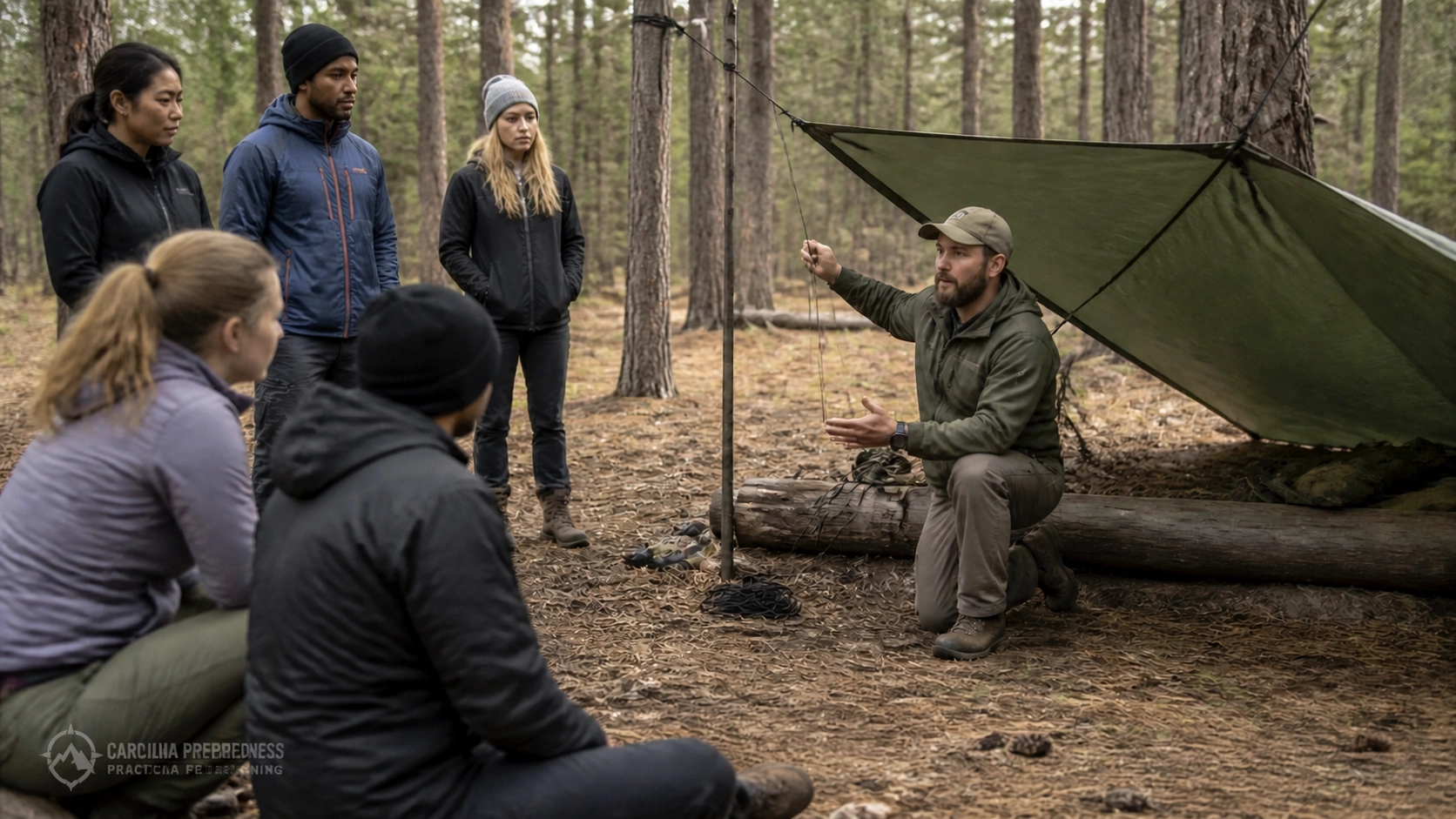
When most people think about learning to protect their families and handle emergencies, they picture scrolling through endless online videos or sitting in a windowless room listening to a slideshow on disaster statistics. But in reality, true confidence in the outdoors does not come from lecture notes. It comes from the calloused hands, muddy boots, and hard-earned muscle memory built through proper survival skills training in real outdoor environments.
At Carolina Preparedness, we believe that preparedness should be calm, practical, and grounded in reality. There is no room for panic, fear-based hype, or theoretical lectures that leave you guessing when the weather turns sour. Whether you are an absolute beginner or a parent looking to build practical self-reliance for your family, mastering the basics of field-first training is the single best investment you can make in your capability.
In this guide, we will break down what survival skills training actually entails, why fieldwork beats classroom theory every single time, and how you can start building tangible competence today.
Why Fieldwork Beats Classroom Slides Every Time
It is easy to watch an instructor tie a taut-line hitch or purify water on a projector screen. You nod along, convinced you have mastered the technique. But step outside into a sudden downpour with cold fingers and fading daylight, and that theoretical knowledge often evaporates.

Hands-on training bridges the gap between knowing about a skill and actually knowing how to execute it under pressure. Real outdoor education teaches you:
- Tactile Feedback: Understanding how green wood burns versus seasoned hardwood, or feeling the exact tension required in a ridge line for an emergency tarp shelter.
- Environmental Awareness: Reading the terrain, noticing shifts in weather patterns, and identifying natural landmarks before you need them.
- Calm Problem-Solving: When a fire starter fails or your water filter clogs on the trail, experiencing those minor hurdles in a controlled, guided environment teaches you how to troubleshoot without panic.
When you practice outdoors with experienced instructors, you eliminate the guesswork. You build calm, quiet competence that stays with you when unexpected situations arise.
The Core Pillars of Practical Survival Skills Training
When building a foundation in outdoor preparedness, you do not need to memorize hundreds of obscure techniques. Instead, focus on the fundamental priorities that keep people safe and comfortable in the field. Every reputable training program builds upon these essential pillars:
1. Emergency Shelter & Exposure Protection
Environmental exposure: hypothermia in cold weather or heat exhaustion in summer: is almost always the most immediate threat in an emergency. Training covers how to rig lightweight tarps, utilize natural terrain windbreaks, and construct effective emergency shelters using minimal gear.
2. Water Procurement and Purification
Humans can survive weeks without food, but only days without clean water. Field training teaches you how to locate viable water sources in different terrains, assess biological and chemical risks, and properly purify water through boiling, filtration, and chemical treatment.
3. Reliable Firecraft
Fire provides warmth, a morale boost, water purification capability, and a signaling method. Beginner training focuses on mastering multiple ignition methods: from modern lighters and ferrocerium rods to natural tinder collection: ensuring you can get a flame going even when the ground is damp.
4. Navigation & Orientation
Getting turned around in the woods is stressful. Practical navigation training teaches you how to read topographic maps, use a baseplate compass, orient yourself without relying solely on electronic devices, and understand basic route-finding rules.
A Simple 8-Week Field Practice Framework
If you want to supplement your learning or prepare for an upcoming course, you can follow a structured weekly outdoor practice schedule. Dedicating just 3 to 5 hours a week to hands-on drills makes a massive difference:
- Weeks 1–2 (Shelter): Practice setting up three different tarp configurations in your backyard or local park. Test how they handle wind and rain.
- Weeks 3–4 (Fire & Water): Practice gathering tinder in damp conditions and starting fires with a ferro rod. Practice filtering water using a portable pump or gravity filter.
- Weeks 5–6 (Navigation): Take a topographic map and compass to a local trail system and navigate a two-mile route entirely off-trail or using checkpoint bearings.
- Weeks 7–8 (Integration): Combine your skills into a short day-hike or overnight camping trip, setting up camp, purifying water, and managing your gear self-reliantly.

Common Beginner Missteps to Avoid
When starting out, it is easy to fall into a few common traps. Keeping these in mind will save you time, money, and frustration:
- Buying Too Much Gear Too Soon: Piles of tactical gear cannot replace knowledge. Learn how to use a few versatile, high-quality items before expanding your kit.
- Skipping the Basics: Everyone wants to learn advanced primitive fire starting on day one, but if you cannot build a sturdy shelter or filter water reliably, advanced tricks won't save you.
- Relying Solely on Electronics: GPS apps and phones are fantastic tools, but batteries die and screens crack. Always maintain analog backup skills.
Take the Next Step with Hands-On Training
Reading articles and practicing in your backyard is a great start, but nothing compares to learning side-by-side with seasoned professionals who have decades of field experience.
At Carolina Preparedness, our small class sizes and beginner-friendly, no-nonsense instruction ensure you get individual attention and practical reps. Whether you are interested in our foundational wilderness courses, family preparedness programs, or personal safety training, we are here to help you build real, usable confidence.
Ready to get outside and learn skills you can actually trust? Browse our courses today and find an upcoming training session that fits your schedule.
SEO & Content Summary
- Primary Keyword: survival skills training
- Secondary Keywords: outdoor survival classes, beginner survival course, hands-on preparedness training, wilderness survival skills, family preparedness.
- Target Audience: Beginners, parents, outdoor enthusiasts, and individuals looking for practical, fear-free emergency preparedness education in the Carolinas and beyond.
- Internal Links: